
When the Scale Stops Making Sense
You have been eating well and exercising consistently. Your clothes fit differently. You have more energy. But when you step on the scale, the number has barely moved — or worse, it has gone up. It is a moment that can derail even the most motivated person, casting doubt on all the effort you have put in.
Here is the truth that standard weight tracking misses: the scale measures everything — your bones, your organs, your muscle, your fat, your water, even the food in your digestive tract. It cannot distinguish between fat loss and muscle gain, between healthy change and simply being dehydrated. Weight is a crude metric, and for many people, it is actively misleading.
The emerging gold standard for assessing progress is body composition analysis. Instead of asking how much you weigh, it asks what that weight is made of — and the answer is far more relevant to your health and your weight loss journey.
What Body Composition Actually Tells You
Body composition analysis breaks down your total body weight into its components: fat mass, lean muscle mass, bone density, and water weight. This information transforms how progress is measured. A patient who has gained two kilograms of muscle while losing three kilograms of fat may see a net loss of only one kilogram on the scale — but their metabolic health has improved dramatically.
Muscle is metabolically active tissue. It burns more calories at rest than fat tissue does, meaning that preserving or building muscle directly supports a higher resting metabolic rate. This is why rapid weight loss through extreme calorie restriction is counterproductive: much of the weight lost is muscle, which lowers metabolic rate and makes long-term weight maintenance harder.
Body composition analysis also reveals visceral fat — the fat stored deep within the abdominal cavity, surrounding the organs. Visceral fat is far more dangerous than subcutaneous fat, as it produces inflammatory markers that increase the risk of insulin resistance, cardiovascular disease, and type 2 diabetes. Tracking visceral fat levels provides a window into metabolic health that the scale simply cannot offer.
Why Conventional Weight Tracking Falls Short
The weight loss industry is built around the number on the scale. Goals are set in kilograms lost, programmes are marketed on dramatic weight reductions, and success is measured by how much the needle moves. This approach ignores the reality that not all weight loss is healthy, and not all weight gain is unhealthy.
A patient following a crash diet may lose five kilograms in two weeks — but a significant portion of that will be water and muscle, not fat. Their body composition has worsened even as the scale shows progress. Conversely, a patient engaging in strength training and proper nutrition may gain muscle while losing fat, with minimal change on the scale but significant improvement in metabolic health.
By focusing solely on weight, conventional tracking can actually discourage the behaviours that lead to lasting health improvements. Body composition analysis provides a more honest and informative picture.
How NuYu Medical Uses Body Composition Analysis
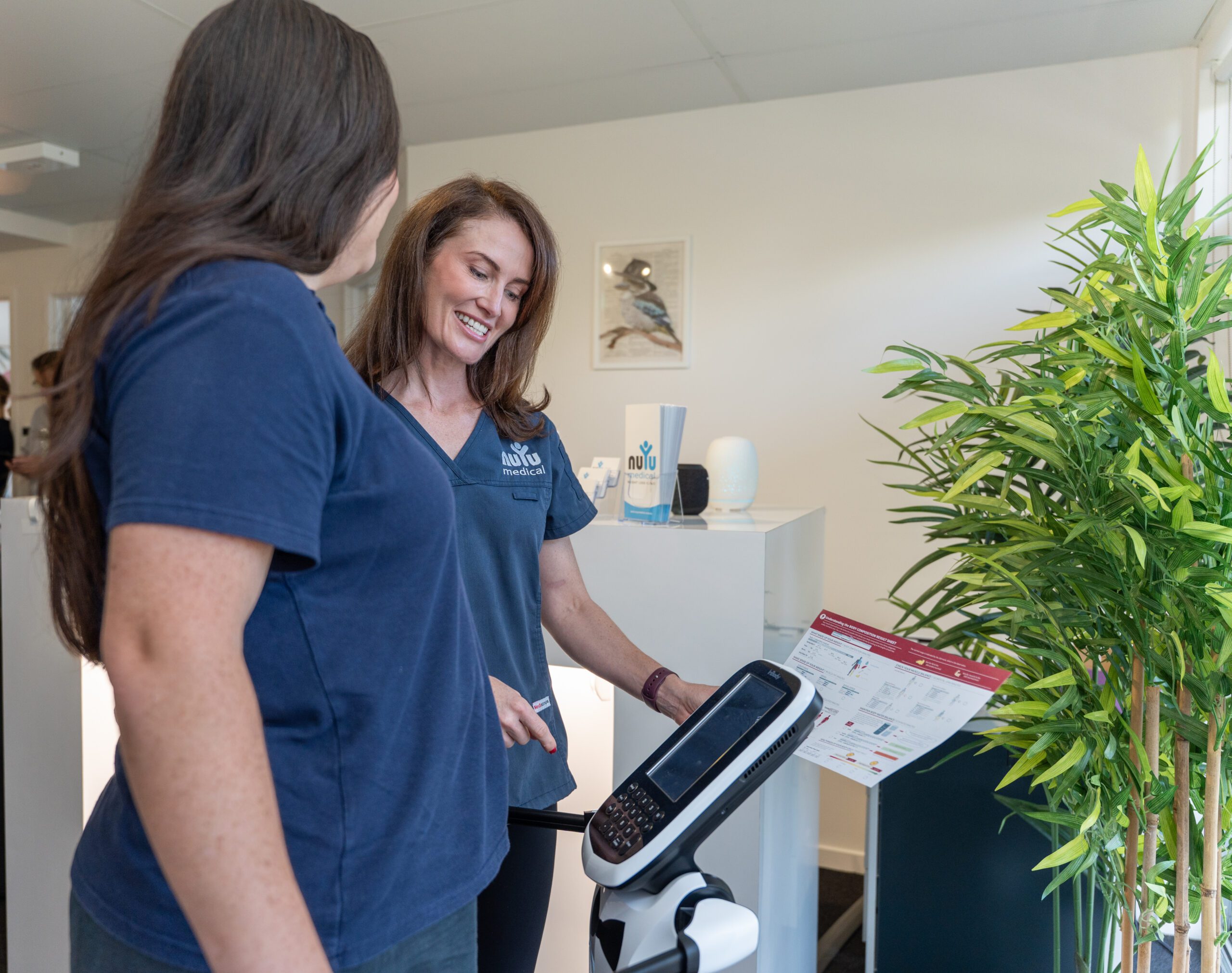
At NuYu Medical, body composition scanning is a standard part of the initial assessment and ongoing monitoring. The scan provides baseline data on fat mass, muscle mass, and visceral fat levels, allowing the clinical team to set meaningful targets that go beyond a number on the scale.
Follow-up scans — typically every four to six weeks — track changes in body composition over time. This allows the medical team to see whether the treatment plan is producing the right kinds of changes: fat loss combined with muscle preservation or gain. If the data shows muscle loss, the plan is adjusted to increase protein intake and adjust exercise recommendations. If visceral fat is decreasing but the scale is stable, that is recognised as genuine progress.
This data-driven approach ensures that patients are not chasing an arbitrary number but are instead improving the metrics that actually matter for long-term health.
Using Body Composition to Guide Your Approach
If you are working on weight loss, consider body composition analysis as a regular part of your monitoring. A single scan establishes your baseline; follow-up scans show whether your current approach is producing the right changes. If you are losing muscle, it is time to adjust your protein intake and exercise programme. If visceral fat is decreasing, you are on the right track even if the scale is slow to change.
Focus on preserving, or even building, muscle through adequate protein intake and resistance training. This supports your metabolic rate and ensures that the weight you lose is fat, not metabolically valuable tissue. Body composition data gives you the feedback you need to fine-tune your approach with precision.
Telehealth and Local Care Options
NuYu Medical offers in-person consultations at the Southport clinic, supporting patients across the Gold Coast and Surfers Paradise, as well as telehealth services for individuals throughout Australia. Consultation fees are provided upfront, ensuring transparency and accessibility at every stage of care.
To access body composition scanning and metabolic health assessment, book an appointment online at nuyumedical.com.au/book-appointment/