
Why Weight Alone Doesn’t Tell the Whole Story
Many people focus solely on the number they see on the scale when thinking about weight loss.
However, weight alone does not reveal whether the body is losing fat, building muscle, or maintaining hydration levels.
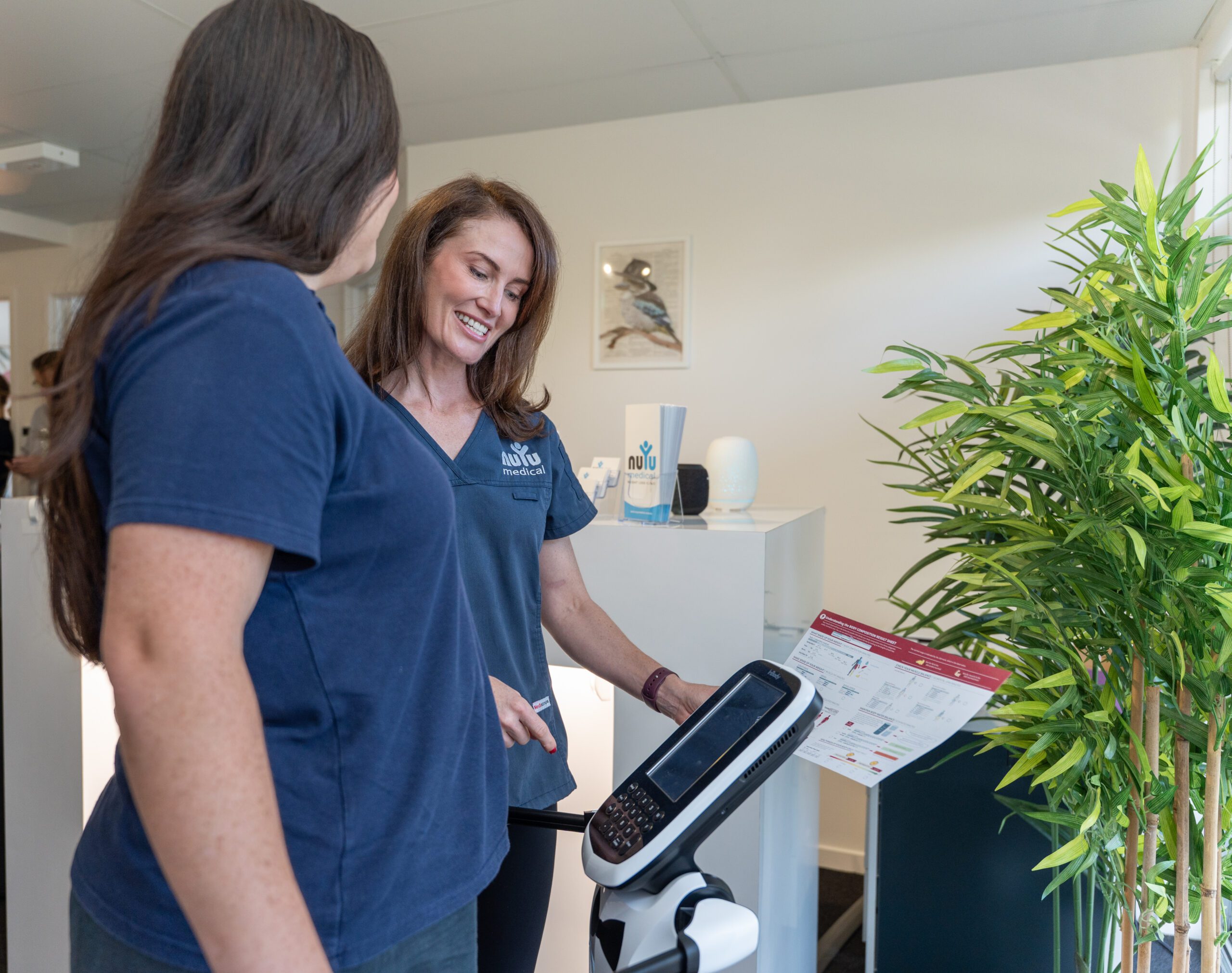
At NuYu Medical, we use body composition scans as part of our medically supervised weight loss programs.
These scans give a detailed breakdown of fat, muscle, and water, allowing our doctors, dietitian, and support team to design tailored treatments that address each patient’s unique needs.
What Is a Body Composition Scan?
A body composition scan is a non-invasive, quick assessment that provides insights beyond standard weight measurements.
It measures key factors such as:
- Visceral fat – fat stored around internal organs that increases health risks
- Muscle mass – important for metabolism and mobility
- Total body water – essential for hydration and overall health
- Body fat percentage – a clearer indicator of health than weight alone
This information helps us determine whether a weight loss program is improving overall body health, not just lowering numbers on the scale.
Why We Use Body Composition Scans at NuYu Medical
Our evidence-based approach relies on accurate data to guide safe and effective weight loss.
By using body composition scans, we can:
- Identify hidden health risks such as high visceral fat
- Tailor dietary and exercise recommendations for better results
- Monitor progress over time with precise, measurable data
- Adjust treatment plans based on real changes, not assumptions
This level of personalisation helps patients achieve sustainable weight management while avoiding the pitfalls of generic programs or fad diets.
How Scans Support Safe Weight Management
Losing weight too quickly or without proper supervision can lead to muscle loss, which slows metabolism and can affect long-term progress.
With regular scans, we can ensure:
- Fat is being reduced safely
- Muscle mass is preserved or increased
- Hydration levels are maintained
- Progress aligns with overall health goals
This approach is especially valuable for patients with cardiovascular concerns, those preparing for surgery, or individuals with hormonal conditions such as PCOS or menopause-related changes.
When to Schedule a Body Composition Scan
Body composition scans are an essential part of your journey and are recommended at key stages, including:
- Initial weight loss assessment – to establish a baseline for your personalised program
- Mid-program check-ins – to measure progress and make necessary adjustments
- Post-program review – to confirm results and develop a long-term maintenance plan
Patients can easily book an appointment for their scan at our Southport clinic, which serves the wider Gold Coast, including Surfers Paradise and surrounding Queensland areas.