Why Breakfast Composition Matters Clinically
The composition of the first meal of the day has measurable effects on appetite, blood glucose, cortisol, and metabolic rate that extend well into the afternoon hours. For individuals managing insulin resistance, hormonal imbalances, or significant weight loss goals, optimising breakfast nutrition is a clinically meaningful intervention, not simply a general health preference.
At NuYu Medical, we encourage breakfast choices that prioritise protein and dietary fibre over refined carbohydrates, supporting the metabolic environment that makes fat loss physiologically possible throughout the day. The following meal ideas are designed to be practical, satisfying, and nutritionally effective within a weight management framework.
The Clinical Principles Behind These Breakfast Choices
Each of the following breakfast ideas is built around several core clinical principles:
- Protein content of at least 20 to 30 grams per meal supports lean mass preservation, reduces ghrelin levels, stimulates satiety hormones, and provides sustained appetite control across the morning hours
- Minimal refined carbohydrate content reduces the insulin response of the meal, supporting the lower-insulin environment between meals that enables fat oxidation
- Dietary fibre inclusion from vegetables, legumes, or seeds slows gastric emptying and glucose absorption, moderating the glycaemic and insulin impact of the meal
- Healthy fat inclusion from eggs, avocado, nuts, or olive oil supports hormonal production, fat-soluble vitamin absorption, and satiety without the insulin impact of carbohydrate-equivalent calories
- Preparation simplicity ensures these options are realistic for the time constraints of everyday Australian life rather than aspirational recipes that require impractical amounts of time
Breakfast Idea 1: Scrambled Eggs with Spinach, Cherry Tomatoes, and Avocado
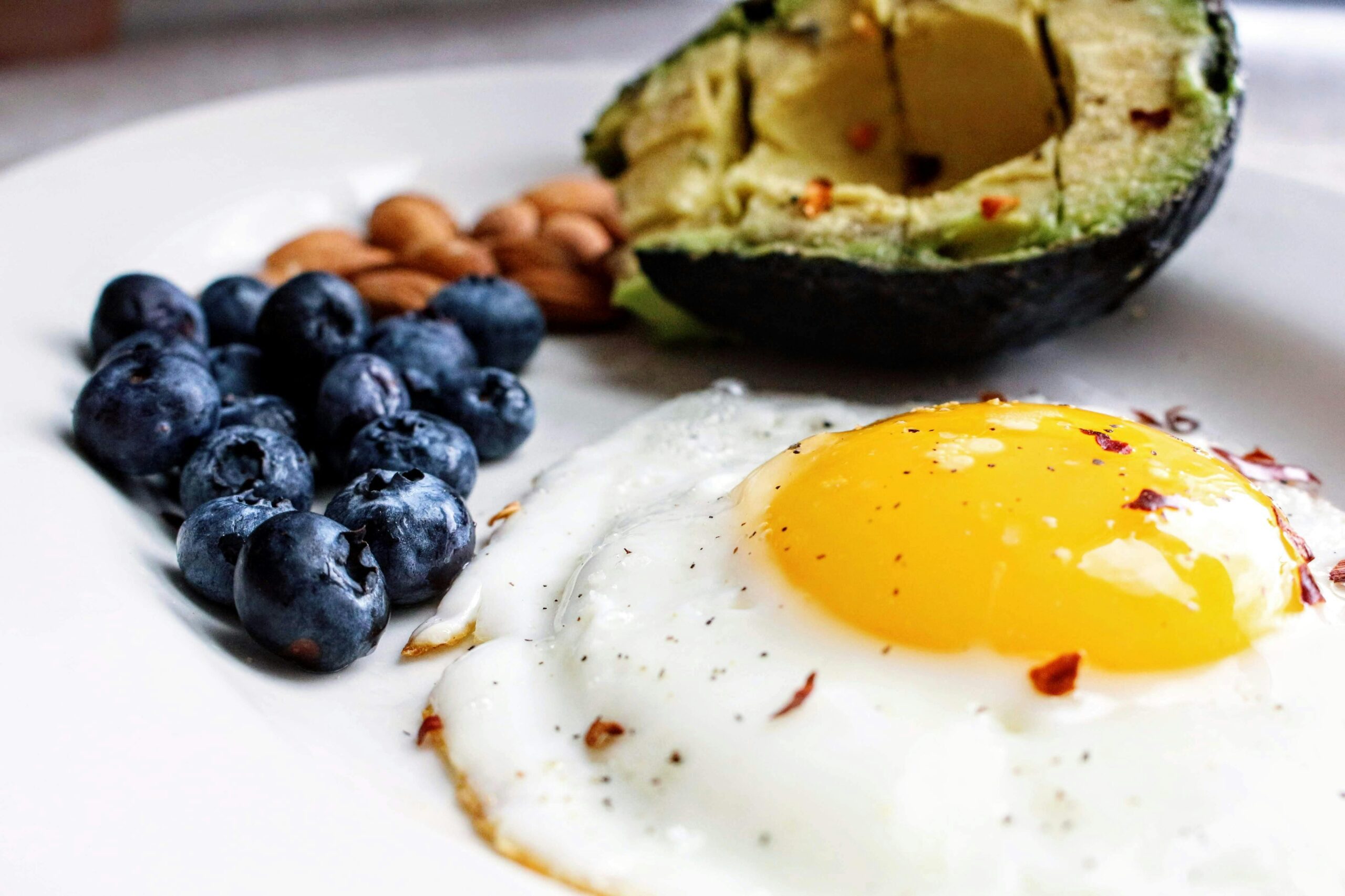
Preparation notes: Three eggs scrambled in a small amount of extra virgin olive oil, combined with a large handful of wilted spinach, halved cherry tomatoes, and half an avocado on the side. Season with black pepper and a small amount of sea salt.
Clinical rationale: Eggs provide complete protein and a range of B vitamins, choline, and selenium relevant to metabolic function. Spinach contributes folate, magnesium, and iron that support energy production and thyroid function. Avocado provides monounsaturated fat that supports insulin sensitivity and delivers potassium relevant to blood pressure and fluid balance. This combination provides approximately 25 to 30 grams of protein with a minimal insulin response.
Breakfast Idea 2: Full-Fat Greek Yoghurt with Mixed Berries, Chia Seeds, and Crushed Walnuts
Preparation notes: 200 grams of full-fat Greek yoghurt topped with a handful of mixed berries, one tablespoon of chia seeds, and a small handful of crushed walnuts. No added sugar or sweetener is needed given the natural sweetness of the berries.
Clinical rationale: Full-fat Greek yoghurt provides approximately 15 to 18 grams of protein per 200 gram serve along with probiotics that support gut microbiome health. Berries provide anthocyanin polyphenols with anti-inflammatory properties. Chia seeds provide soluble fibre that moderates the glycaemic response and expands in the stomach to enhance satiety. Walnuts provide alpha-linolenic acid, an omega-3 precursor, along with anti-inflammatory polyphenols.
Breakfast Idea 3: Smoked Salmon with Poached Eggs on Rye Crispbread
Preparation notes: Two poached eggs on two slices of rye crispbread, topped with 80 to 100 grams of smoked salmon, capers, a squeeze of lemon, and fresh dill or cucumber.
Clinical rationale: Smoked salmon provides omega-3 fatty acids EPA and DHA with direct anti-inflammatory and insulin-sensitising effects. Eggs contribute additional protein and vitamin D, which is relevant to insulin sensitivity and immune function. Rye crispbread provides soluble fibre with a lower glycaemic response than wheat bread alternatives. This combination provides approximately 30 to 35 grams of protein.
Breakfast Idea 4: Cottage Cheese and Vegetable Omelette
Preparation notes: Two to three eggs whisked and cooked as a flat omelette in olive oil, filled with two tablespoons of full-fat cottage cheese, spinach, capsicum, mushrooms, and fresh herbs. Fold and serve with a small side salad if desired.
Clinical rationale: Cottage cheese is one of the highest protein foods available by volume, providing casein protein that digests slowly and sustains amino acid availability across the morning. Combined with eggs, this breakfast achieves 35 to 40 grams of protein with minimal carbohydrate content. Capsicum contributes vitamin C that supports collagen synthesis and immune function.
Breakfast Idea 5: Protein Smoothie Bowl
Preparation notes: Blend one scoop of unsweetened protein powder, one cup of frozen cauliflower rice, half a cup of frozen berries, one cup of unsweetened almond milk, and one tablespoon of almond butter until thick. Pour into a bowl and top with a tablespoon of chia seeds, a small handful of berries, and a sprinkle of unsweetened coconut flakes.
Clinical rationale: Frozen cauliflower rice provides volume, fibre, and nutrients without the carbohydrate content of banana or conventional smoothie base ingredients. Protein powder ensures the meal achieves at least 25 grams of protein. Almond butter contributes monounsaturated fat and additional protein. The thick bowl format encourages slower consumption than liquid smoothies, supporting appetite hormone responses.
Adapting These Breakfasts to Specific Clinical Contexts
The principles underlying these breakfast ideas can be adapted to individual clinical needs:
- Patients with PCOS benefit from even lower carbohydrate breakfast choices and higher protein emphasis to support insulin and androgen management
- Patients with low appetite in the morning, which may indicate elevated cortisol suppressing hunger signals, can start with smaller protein servings and gradually increase as appetite normalises with cortisol management
- Patients who travel frequently for work can adapt these principles to hotel breakfast options by prioritising eggs, smoked salmon, full-fat yoghurt, and fresh fruit over pastries, cereals, and fruit juices
Telehealth and Local Care Options
NuYu Medical supports patients in-clinic at our Southport location and via telehealth appointments available across Australia. Fees are discussed upfront to support ongoing engagement.
Book an appointment online to begin a nutritional consultation that includes individualised meal planning support as part of your comprehensive weight management plan.