
When Your Thyroid Test Says Normal but Nothing About Your Body Feels Right
There is a particular frustration that comes with being told everything is fine when every signal suggests otherwise. You have been diligent with your eating, consistent with exercise, and yet the scale refuses to move. Worse, you feel cold when others are comfortable, your energy disappears by mid-afternoon, and your mind feels wrapped in a fog that no amount of sleep can clear. So you visit the doctor. A blood test is ordered. The result: your thyroid is normal.
For many Australian women, this is where the conversation ends. The TSH value sits within the laboratory reference range, the word “normal” is stamped on the report, and the underlying message is that the problem must be elsewhere. The patient leaves with the same symptoms and a new layer of self-doubt. This experience, being dismissed by a single lab value that does not capture the full picture, is one of the most overlooked barriers to effective weight management.
What the Thyroid Gland Actually Does and Why “Normal” Is a Wide Target
The thyroid produces two primary hormones: thyroxine (T4) and triiodothyronine (T3). T4 is the storage form, released into the bloodstream where peripheral tissues convert it into T3, the active hormone that binds to cell receptors. When thyroid hormone levels drop, the pituitary gland releases thyroid-stimulating hormone (TSH), which prompts the thyroid to produce more. When levels rise, TSH falls. This feedback loop is elegant in theory but far messier in practice, because the conversion of T4 to T3, the sensitivity of cellular receptors, and the presence of thyroid antibodies can all influence how a person feels regardless of what the TSH number reads.
The clinical challenge is that laboratory reference ranges for TSH are established by testing large populations, including people who may have undiagnosed thyroid dysfunction. The upper limit of “normal” in many Australian laboratories sits around 4.0 to 4.5 mIU/L, yet research increasingly suggests that a healthy thyroid typically produces a TSH below 2.5 mIU/L. A patient with a TSH of 3.8 may be told their result is normal, yet they could be experiencing genuine hypothyroid symptoms. Even when TSH is within range, low free T3 or elevated reverse T3 can indicate poor conversion, sufficient thyroid hormone is produced but the body cannot activate it efficiently. This is why a full thyroid panel is essential when evaluating thyroid function in the context of weight concerns.
Why Generic Weight Loss Advice Fails When the Thyroid Is Involved
Standard weight loss guidance, eat less, move more, assumes a metabolic engine that responds predictably to changes in energy intake. When thyroid function is low, that assumption collapses. Basal metabolic rate can drop by 15 to 30 per cent in untreated hypothyroidism, meaning the same dietary intake that once maintained a stable weight now produces a surplus. The body also reduces thermogenesis and preferentially stores energy as fat. Telling a patient with undiagnosed thyroid dysfunction to simply cut more calories ignores the underlying physiology, because further calorie restriction signals the body to downregulate metabolism even more aggressively.
This is where many patients arrive at weight loss clinics having spent years feeling blamed for a problem that was never within their control. They have tracked every kilojoule and exercised through exhaustion, only to watch the scale barely move. Validating that experience, acknowledging that the effort was real and the failure was not personal, is a necessary part of any effective clinical intervention.
A Medical Approach to Thyroid-Driven Weight Concerns
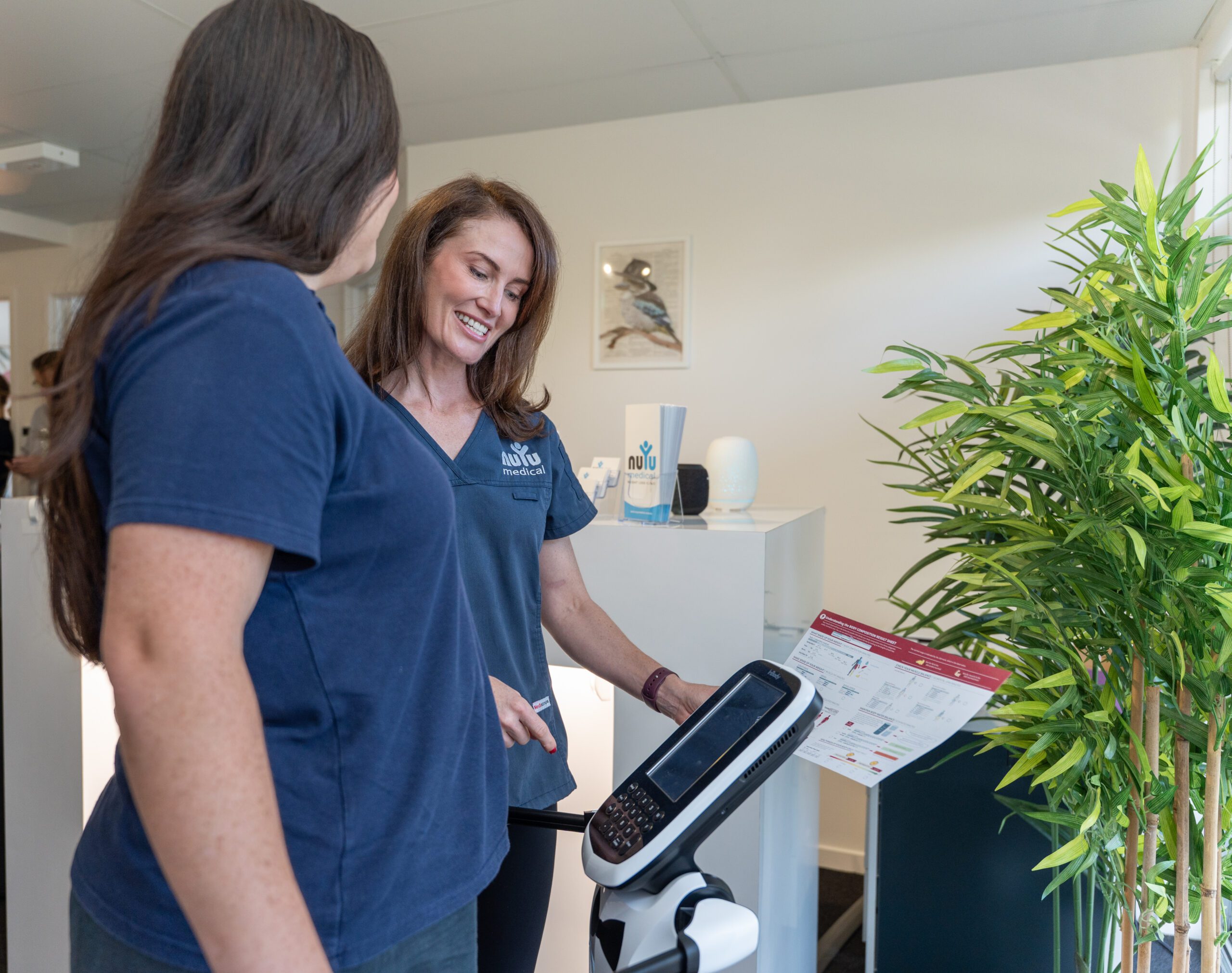
At NuYu Medical, the approach begins with listening to the full story. When thyroid dysfunction is suspected, a comprehensive evaluation includes TSH, free T4, free T3, reverse T3, and thyroid antibodies. These markers together reveal whether the problem lies in production, conversion, or autoimmune attack. If treatment is indicated, the goal is not merely to push TSH into the reference range but to achieve a level at which the patient feels well, energy returns, cognitive clarity improves, and the metabolic environment becomes one in which weight loss is physiologically possible.
Addressing thyroid function is rarely the whole solution, but it is frequently the missing piece that makes every other intervention effective. Once thyroid hormone levels are optimised, the same dietary and lifestyle strategies that previously yielded no results often begin to work as expected. This integrated approach, medical optimisation alongside nutritional guidance and ongoing monitoring, reflects the reality that thyroid health interacts with insulin sensitivity, cortisol patterns, and gut function.
Practical Strategies for Thyroid-Informed Weight Management
The first practical step is to request a full thyroid panel rather than TSH alone. Knowing free T4, free T3, reverse T3, and antibody status distinguishes between production problems, conversion issues, and autoimmune thyroiditis. Tracking symptoms over time, noting energy levels, sleep quality, and weight trends, helps ensure the subjective experience is given appropriate weight alongside laboratory findings.
Nutrition plays a supportive role. Selenium, found in Brazil nuts, seafood, and eggs, is a cofactor for the enzyme that converts T4 to T3. Zinc, present in red meat, oysters, and pumpkin seeds, supports thyroid hormone receptor function. Regular, moderate physical activity, particularly resistance training, supports metabolic rate without the stress that high-intensity endurance exercise can place on an already struggling system.
Telehealth and Local Care Options
NuYu Medical offers in-person consultations at the Southport clinic, supporting patients across the Gold Coast and Surfers Paradise, as well as telehealth services for individuals throughout Australia. Consultation fees are provided upfront, ensuring transparency and accessibility at every stage of care.
To receive support for thyroid-related weight concerns, book an appointment online at nuyumedical.com.au/book-appointment/