
When It Feels Like Your Body Is Fighting You at Every Turn
Living with polycystic ovary syndrome and trying to lose weight can feel like an exercise in futility. A woman with PCOS may eat the same meals as her friend who is successfully losing weight, exercise with the same consistency, follow the same advice and see dramatically different results. Cravings for carbohydrates can feel almost compulsive, and the fatigue that accompanies the condition makes summoning the energy for exercise a genuine challenge. The standard narrative — that weight loss is a simple equation of calories in versus calories out feels like a cruel joke when biology is tipping the scales in the opposite direction.
What makes this experience particularly isolating is that PCOS is often under-recognised and poorly explained. Many women are diagnosed and told to lose weight without being told why weight loss is so difficult in the context of their condition. They are sent off with generic advice that was never designed for a body with high androgens, insulin resistance, and a metabolism that stores fat with remarkable efficiency. Understanding the underlying conditions is the first step toward working with them rather than against them.
The Insulin-Androgen Loop Driving PCOS Weight Gain
At the core of PCOS-related weight gain is a self-reinforcing cycle between insulin and androgens. Insulin resistance in which cells respond less efficiently to insulin is present in the majority of women with PCOS, regardless of body weight. When cells resist insulin’s signal, the pancreas compensates by producing more of the hormone. Elevated insulin levels, in turn, stimulate the ovaries to produce excess androgens male hormones such as testosterone which promote fat storage, particularly around the abdomen.
Here is where the cycle tightens: abdominal fat tissue is itself metabolically active, releasing inflammatory substances that worsen insulin resistance. Higher insulin drives more androgen production. More androgens promote more abdominal fat storage. More abdominal fat worsens insulin resistance. The cycle becomes self-perpetuating, and weight gain is not merely a symptom but an active participant in driving the condition forward.
Why Generic Weight Loss Advice Fails PCOS Patients
The standard recommendation to eat less and exercise more is not merely unhelpful for women with PCOS it can be counterproductive. Severe calorie restriction triggers a stress response that elevates cortisol, which in turn can worsen insulin resistance and stimulate further androgen production. Excessive cardiovascular exercise, particularly high-intensity steady-state training, can produce a similar cortisol response in some women, adding fuel to the very hormonal fire that is driving the weight gain.
Even the conventional guidance to reduce fat intake can miss the mark, because it is not dietary fat that drives the insulin-androgen cycle it is the type and timing of carbohydrate intake, particularly refined carbohydrates that provoke large insulin responses.
A Targeted Clinical Approach to PCOS Weight Management
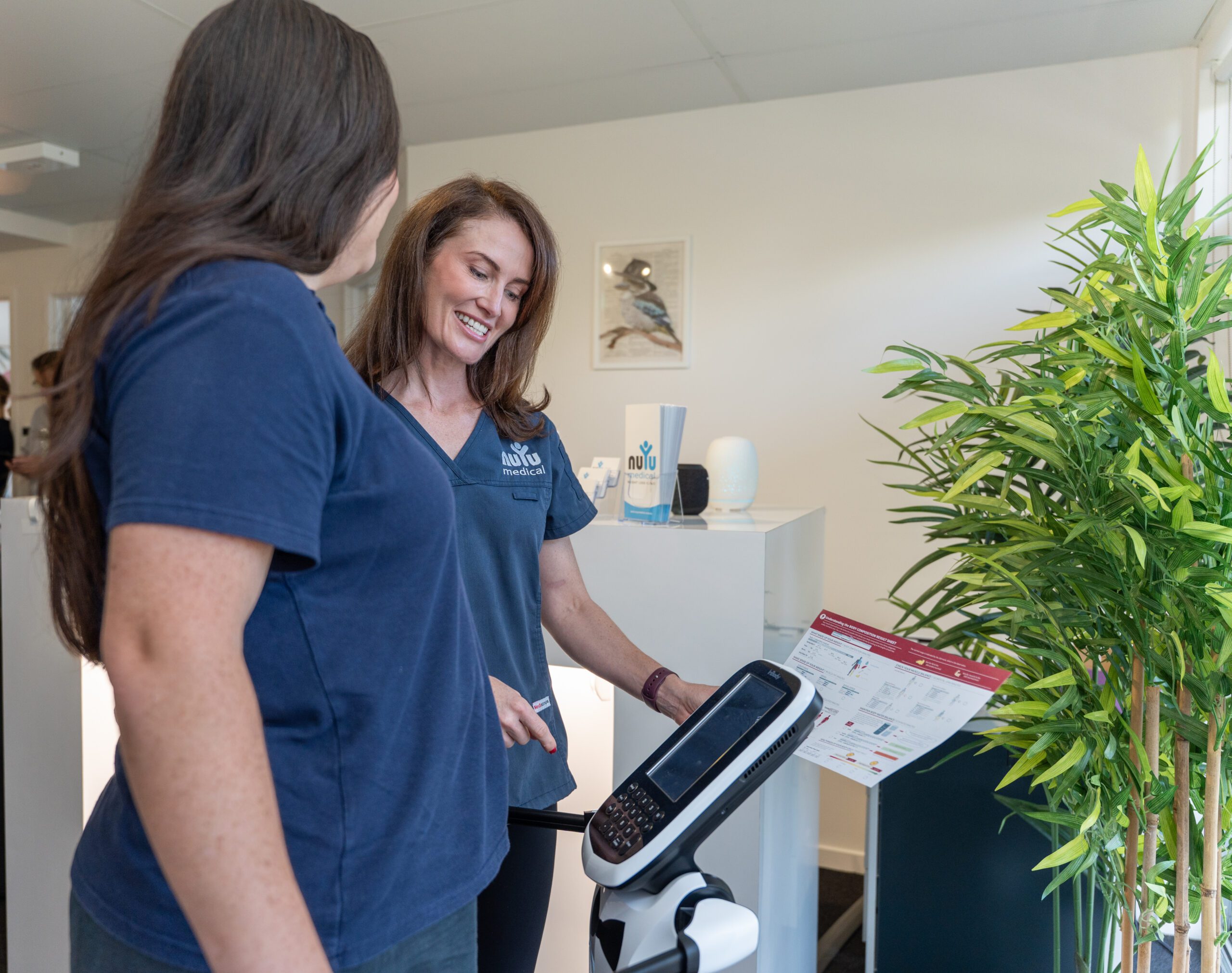
At NuYu Medical, the starting point for PCOS weight management is a comprehensive assessment that maps the specific hormonal and metabolic patterns present in each patient. Blood testing measures fasting insulin a far more revealing marker than fasting glucose alone along with androgen levels, thyroid function, and nutrient status. A body composition scan reveals whether excess weight is predominantly visceral fat, which is the metabolically dangerous pattern that fuels the insulin-androgen cycle.
From this data, a personalised treatment plan is developed. For many patients, this includes nutritional strategies that moderate the insulin response to meals — prioritising protein and fibre, choosing lower-glycaemic-index carbohydrates, and structuring meals to avoid large insulin spikes. In some cases, medications that directly address insulin resistance may be appropriate; in others, GLP-1 receptor agonists may be considered for their dual benefits on weight and insulin sensitivity. Each decision is based on the individual patient’s blood work and body composition data, not a generic PCOS protocol.
Practical Strategies for Weight Loss With PCOS
The single most impactful dietary strategy for PCOS is often the simplest: prioritise protein at every meal. Protein provokes a minimal insulin response compared to carbohydrates, supports satiety, and helps preserve lean muscle mass which in turn supports metabolic rate. Aiming for 25 to 35 grams of protein per meal provides a steady supply of amino acids without the insulin spikes that drive the PCOS cycle. Fibre is equally important: soluble fibre, found in oats, legumes, apples, and flaxseeds, slows glucose absorption and blunts the insulin response to meals.
The role of exercise in PCOS deserves careful consideration. Resistance training using weights, bands, or bodyweight improves insulin sensitivity and builds muscle without provoking the cortisol spikes that can accompany prolonged, high-intensity cardio. Two to three strength sessions per week, combined with moderate walking or other low-intensity movement, offers metabolic benefits while minimising the stress response that can worsen PCOS symptoms. This is about choosing the type of work that cooperates with the body’s hormonal environment rather than fighting against it.
Telehealth and Local Care Options
NuYu Medical offers in-person consultations at the Southport clinic, supporting patients across the Gold Coast and Surfers Paradise, as well as telehealth services for individuals throughout Australia. Consultation fees are provided upfront, ensuring transparency and accessibility at every stage of care.
To receive support for PCOS weight management, book an appointment online at nuyumedical.com.au/book-appointment/